
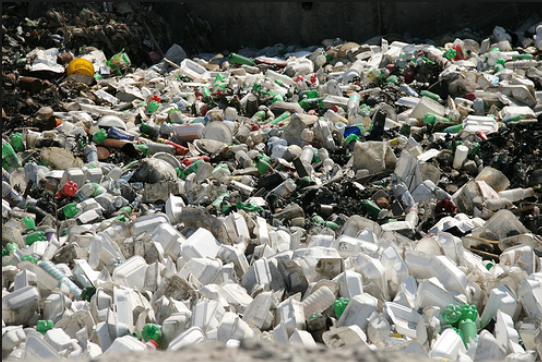
The Tamil Nadu government has announced the ban of disposable and non-bio degradable plastic products effective January 1, 2019. The Chief Minister Shri Palaniswamy made the announcement in the assembly on June 5, 2018 coinciding with the World International Environment Day. Banning of such plastics is a huge step for us, although it is very obvious in terms of environmental protection. Primarily it should also reduce the garbage generated by at least 10 to 15 percent. Unfortunately the Chief Minister did not highlight any action plan, the priorities, and challenges that lie ahead for the state and the people in achieving the same. It is sad that despite the announcement, there is a shocking lack of immediate follow up directions on the ground or proof that the government is serious and working on it. This is all the more important given the fact that the state had earlier experimented with the ban even imposing fines on defaulters, but had failed. There is no second opinion on the harm of plastic and the need to ban them. The government must realize the seriousness behind the issue and throw its weight behind it, take it on a war footing, and involve every household in it.
Looking back at the chief minister’s announcement there is very little to believe that things would be different this time. Questions are being asked whether the government had learnt anything from its previous ineffectiveness to ensure that this time all goes well. Although over 17 states and union territories have imposed this ban fully or partially, their effectiveness is a question mark, as change is barely visible on the ground. According to a UN report coinciding with the World Environment Day, laws aimed at reducing plastic has had good results in places like Morocco, Rwanda, and parts of China, but not so well in other places. The report added that Delhi has only seen limited impacts due to poor enforcement. Like Tamil Nadu, Delhi too had tried to ban plastic bags in the past decade, even announcing heavy fines, but with failure. Fortunately for us states like Sikkim and Himachal are seeing better results. Earlier this year when Jammu and Kashmir banned plastic carry bags, Reuters quoted shopkeepers as saying, “We have been hearing this for a long time -I don’t think (the ban) is going to work,” and “If the government is serious about stopping the use of polythene, it should ban its manufacturing. That will force people to carry their own bags,”
The state government must realize that it cannot afford to miss out this time and that the challenges are massive. It needs to sensitize all its departments to review the use of plastic under its purview. The government must give an ultimatum of say 30 to 45 days for banning it from all its own departments and that of its associates to become plastic-free, as a show of leadership. Perhaps the largest consumer of disposable glasses and water sachets in the state is its own TASMAC liquor bars where its contractors sell thousands of both items daily for about 7 to 8 rupees each against the market rate of 1 to 2 rupees.
Making the plastic ban a success requires proper planning and enforcement. The UN report recommends that governments introduce financial incentives to consumers, retailers, and manufacturers to encourage them to change their habits. Government policies must be directed at achieving a more circular model of plastic use, which means recyclability and regeneration. Governments must finance research and development of alternative materials and engage in a broad range of stakeholders in the decision making process to tackle the crises. Most importantly the report notes that the rising tide of plastic can only be met by strong government leadership and intervention. With plastic ban effectiveness data available from only 50 percent of countries that have banned plastic, it is seen that 30 percent have realized massive drop in plastic bags consumption within first year. The remaining 20 percent have reported little or no change. The problems here are a lack of enforcement and a lack of affordable alternatives. Over 60 nations had introduced the ban on single use plastic like plastic bags and Styrofoam. It must be noted here that about 10 million plastic bags are consumed every minute worldwide.
The UN has drawn up a 10 step roadmap for governments aspiring to achieve ban of single use plastic. These include.
- Target the most problematic single use plastic.
- Consider the best actions to tackle the problem
- Assess the impacts it can cause on the poor and other sectors.
- Identify and engage key stake holder groups
- Raise public awareness
- Promote alternatives
- Provide incentives to industry to support its transition
- Use revenues from single use plastics to maximize public good.
- Enforce measures effectively
- Monitor and adjust the chosen measures as necessary and update public on the progress.
To implement the ban effectively, government must educate people on the need to make the initiative a success and seek public support. As much as possible the bureaucracy should spell out what is expected of people, like what to do when their handy disposable water bottles won’t be available and how to adapt to a life without carry bags. Jute, paper, and cloth bags can be directly resourced and sold by the government itself at the beginning for early change seekers till the industry and marketers can take over. Any new change definitely brings about challenges but also new opportunities. What are the new opportunities here that can be exploited? Self help groups can also pitch in and take advantage of the presenting opportunities, but here too, they look upon the government to lead them.
One of the major reasons for the failure of plastic bans in the society may be attributed to its inability to recognize the core problem and address it effectively. The manufacturers of such products are the problem. A ban on any product should first be led against the sources of its origin which when curbed, the rest will automatically fall or be adjusted with time. When the origin is not restricted or is ineffectively controlled, the ban is very likely to fail. With marketing and sales gone trans-borders, shutting down a state’s manufacturing units creates a black market for these products from beyond its borders. Therefore the manufacturers of such products need to be restricted, hand in hand with a crackdown on those who bring these from beyond borders.
Unfortunately the disposable plastics and non-bio degradable plastic products industry employ several thousand either directly or indirectly. It is wrong on the part of the government to order them shut overnight without giving them feasible alternatives, technical know-how, financial aid, and supporting them in their transition. The government must have a solution for them with possible options and then force it on them with an ultimatum. The ball like in every other case is again in the government’s hand. Implementing the ban can be simplified, effective, and result oriented if the issue is approached in a strategic manner. Stop manufacture of banned products, facilitate introduction of alternatives, and motivate people to move in the required direction.
With a lack of any visible significant activity since the announcement of the ban there is now an urgent need for government to act and to change public mindset that it means business this time. Left to themselves the people will never strive for the change without a persuading reason. In this case there is very little that people can do by themselves. Unlike the helmet rule where the government can crackdown straightaway, here it is the government that is expected to take the first steps and lead the people in the transition. Making the ban effective requires a multi-centric approach with a detailed game plan, roping in only dedicated, result oriented people, avoiding disinterested and those that have corruption records. It is also important to realize and expect that the current exception list might need to be expanded as it gets along or ultimatum extended for certain items.
The government must primarily accept that it is in its responsibility to show way for all and none is forced to a dead end in their effort to find their own way. The options may be hard, difficult, costly but nonetheless need to be adopted by people at least until better options are developed. Importantly the government could launch a helpline to receive queries and provide clarifications on the new law. This helpline could throw up unexpected problems or situations early on. It can also be used to get information on those who still deal with the carry bags or bring them from other states. All ministries need to identify the breaches occurring under its purview and initiate compliance regulations. Ministers or officers from varied sectors should address the press regularly on its step by step achievements and progress towards the goal and reiterate full compliance on the D-day. This in turn will cause people to adapt accordingly. Committees can be formed both geographically and sector wise to register and address grievances and difficulties in the transformation. Some of these challenges might need to be put across to a higher deciding committee that can coordinate with the central government, the academia, or industry for feasible solutions. The state can also benefit by working closely with institutions like CIPET. A visit to study the experiences of Sikkim could be helpful.
It is important for the government to launch a significant awareness campaign through press and media to outline the need for the ban and welfare of the future generations. A vigorous campaign needs to be started and stepped up each day to generate and sustain public involvement. A dedicated portal towards this end can help people share experiences, suggestions and ideas, where alternative products like bags, can be brought. Government can keep informing people on a regular basis on how it would meet the new demands of the people, like for example water requirements of traveling people with no disposable water bottles available. Sadly at this crucial juncture, the state is handicapped with municipalities having no councilors who could have served as nodal officers in this transition.
Together let’s get rid of plastic from our society. Let’s give a safe environment to our children.


