
The fit India campaign is creating massive fitness awareness and interest with individuals including the prime minister, posting videos of their workout and challenging friends and colleagues to showcase their workouts. With the Indian physical fitness awareness movement taking effect now, it is important to know how physical fitness was considered to fit into the welfare and progress of a nation even in the early 20th century, by the founding father of the People’s Republic of China, Mao Tse-tung.
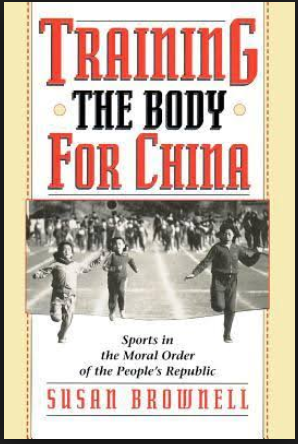
Under Mao Tse-tung, the strong and healthy bodies of the workers were considered to function as metaphors for the strong and healthy working class. Training the body, or taking part in sports, was not merely seen as promoting the people’s health, national defense and production, but also as inspiring the collective work spirit necessary for the national unity which was considered a prerequisite to national construction.
In his essay, A Study of Physical Education, which was originally published in April 1917, Mao Tse-tung, emphasizes on the need for physical education, which according to him was lacking in the nation. He was worried of the deteriorating physical condition of the populace, which he felt was a ‘disturbing phenomenon’. Terming the spirit to develop physical strength as a military spirit, he noted that weak bodies would be afraid of enemy soldiers. When such is the state, he asked, ‘How can we achieve our goals and self respect?’. Mao seemed to be concerned of the implications of physical strength for the nation.
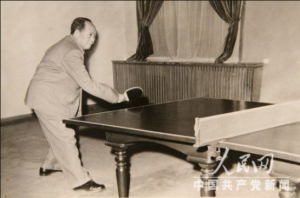 Mao saw a role difference between those who devised the methods of physical education and those who promoted them. He was satisfied with the advocates of physical education who had devised methods and procedures for such physical strengths, but it was the promoters of the physical education who hadn’t yet understood its importance; he was unhappy with. Mao then suggested ways how physical education can be promoted among the masses. It is by influencing the subjective attitude of the people and making them conscious of it. When there is an awareness of this problem, people would begin to inculcate physical education, which would help in achieving the goals of the country. Mao saw a role for the policy makers to promote physical education and physical strength, more than health or physical education experts.
Mao was able to see a larger picture of physical exercise in the world, and also which sections of the people take to what. Emphasizing that the East and West differ in their interpretations of physical education, Mao highlighted the spread of physical education and its interest around the world. He specifically mentions specific aspects of physical education that has become prominent among the countries. For instance he says that fencing has become popular throughout Germany, while Judo and bushido have become popular in Japan. He makes an important note that all these began with an understanding of physiology.
Mao goes on to strategically position physical education with general education and knowledge, highlighting which is actually important. To him physical education actually complements knowledge and virtue. Since the knowledge and virtue (morality) reside in the body, without a body these would be nonexistent. He links body, knowledge, and virtue by associating body to a chariot that contains knowledge, which is the chamber that houses virtue. Ranking physical education as being more important than knowledge and morality in primary school, he stressed the need for physical education in primary schools. For middle and high school he wanted emphasis on all three aspects of education. Upset that people do not understand this and follow it at the moment, he justified his importance for physical education in primary schools by pointing out that students become ill or even die young when too weak. This positioning of physical education with knowledge and virtue establishes the importance of physical strength. His differential ranking, emphasizing physical education as being more important than the other two at the primary level, emphasizes the importance he attached for physical strength at the primary level. This is indeed a significant observation, because the fundamentals develop at this primary stage.
Mao comes down heavily on the existing educational system that has not emphasized on physical education. Mao sees the biggest calamity that can befall a man is not having a good body. To him, everything would follow automatically, when the body is improved. With a strong body, knowledge and morality is advanced, resulting in huge benefits. His philosophical observations are easily convincing. Mao creates a clear picture of the society, which resulted from a lack of physical education. He sadly describes the physical condition of today’s students. Without physical education, students today have to bow down the heads and bend their backs. With ‘white and slender hands’, students become breathless when they climb a hill or get cramps when they walk in water, he says. For him bowing heads and bending the backs was a huge concern than cramps and breathlessness. He also attributed this lacking of physical strength to the short lives of people like Yen Tzu, Chia I, Wang Po and the paralysis of Lu Chao-lin. According to him, these men of high morality and knowledge did not have a compatible body. When body cannot withstand, the morality and knowledge, they too succumb.
Mao investigates the reasons for the dislike of physical education and points out four aspects that are instrumental for this attitude.
Lack of self-awareness
Difficulty in changing long established habits
No forceful implementation of physical education
Feeling exercises to be a shameful act
With flowing garments, calm gaze, elegant postures and movements, these reflect fine presentation that command respect from the society. Compare this with suddenly moving an arm or exposing a leg. Doesn’t it look strange and awkward?, Mao seems to ask. Even when people understand the need and importance of physical exercises, they are not able to move ahead because of such factors mainly due to shame. He sees the element of shame running primarily in their decision not to exercise. This he says is reflected in people wanting to exercise in private and not in public or even among those who want to exercise in groups and not alone.
The philosophy of Mao on physical education reflects on how deep he wanted to get into it to understand them for the people of those days. He addresses the shortcomings relevant in physical exercises. He recommends few exercise methods, although there are several hundreds of them. Mao feels that all exercises are directed at improving the blood circulation and therefore doing just one would fetch the results of all the rest. He justifies this by saying that the eyes can only see one thing at a time and the ears can listen to only one thing at a time. Mao then recommends on the best way of exercising, calling on sustained interests for exercise, he philosophically comments that anything at rest cannot set itself in motion. He tells with confidence that perseverance creates interest. Mao tells people that exercising twice is the best way of exercising and that the ideal time to exercise would be getting up from bed and before going to bed. He adds that exercising in less clothes or in the nude is better, if not light clothes should be worn as too much clothing can impede movements. He then recommends exercise to be savage and rude which means tough. The reasons he attributes for this is that only tough exercises can impart the phenomenal strength to uproot mountains, or to shake it by one’s cries, to change the color of the sky by one’s roar of anger.
