
Rice is the major staple food in Asia and about 92% of the world’s rice is produced and consumed in Asia. However, the quality of irrigation water is being reduced by chemical pollution and salinization, and the water resource itself is being depleted by falling groundwater tables, silting of reservoirs, and increased competition from urban and industrial uses. Asia now needs to grow more rice with less water to sustain the continuing population growth.
Indian farmers have been consistently fighting water crises. According to The Diplomat, an international current-affairs magazine, apart from shortage of dams, India’s water crisis stems from a mix of several economic, geographic, and political factors. We are highly dependent on a few major river systems, especially the Ganges, Cauvery and its tributaries, for its water supply. But a crucial point is India also uses almost twice the amount of water to grow crops as compared to China and United States. Although there are several reasons for this, there are two main reasons: Power subsidies and the Minimum Support Prices (MSPs).
First, power subsidies for agriculture have played a major role in the decline of water levels in India. Unmetered and free power led to inefficient use of electricity and groundwater by the farmers, and enabled camouflaging of losses and electricity theft. This has left the country’s aquifers depleted and its power sector nearly bankrupt. A survey by the Punjab agriculture department indicates that in the last eight years, more than 54 per cent of farmers have installed water guzzling submersibles, and more than 45 per cent have got their motors renewed to increase the power, or simply purchased higher capacity motors.
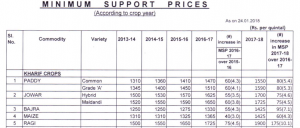 Second, it has been observed that even though Minimum Support Prices (MSPs) are currently announced for around 25 crops, the most effective price support is for sugarcane, cotton, wheat, and rice, which are vey water intensive. By replacing the traditional mixing of crops with high-yielding wheat, rice, sugarcane, and cotton, the consumption of water has gone up. This apart, new artificially modified seeds that provide higher crop yields, are also thirstier than natural seeds. Although government has emphasized on the need to cultivate less water intensive crops, there is lack of support for the change.
Pointing out as “some classic examples” the magazine points out the farming practices in states of Maharashtra, Punjab, and Haryana. The agricultural shift by profit-motivated young farmers has made things worse. Farmers who once grew millet, sorghum, and other cereals have turned to sugarcane in Maharashtra, which fetches more money but is a very thirsty crop. Sugarcane consumes about 22.5 million liters of water per hectare during its 14-month long growing cycle compared to just 4 million liters over four months for chickpeas, commonly grown in India and called gram locally. Growing sugarcane in drought-prone areas is a recipe for water famine. Yet, the land area under sugarcane cultivation in Maharashtra has gone up from 167,000 hectares in 1970-71 to 11 lakh hectares in 2015 Maharashtra is India’s second-biggest producer of this water-intensive crop, despite being one of the country’s drier states with 79% of this grown in drought prone regions and 71% of irrigated land in the state not irrigated by large dams or canals, but by wells.
Sugarcane cultivation and sugar industries have for decades received privileged treatment, thanks to the factories being either owned or controlled by the state’s politicians. In 2012-13, Marathwada region of the state added 20 sugar factories even as villages were supplied drinking water through tankers. Today, there are around 205 sugar factories in the state, of which 70 are in Marathwada alone. Sugarcane now uses about 70 percent of Marathwada’s irrigation water despite accounting for only 4 percent of cultivated land. However there is now a ban on new sugar mills in Marathwada.
The situation is similar in Punjab and Haryana but with rice, where the area under cultivation has risen phenomenally. Though the droughts have hit all crops, India still produces more rice, wheat, and sugar than it consumes. For 2016-17 year, the procurement from October 1, 2016 to year end shot up by over 17% for the same period last year. In 2017, Punjab has procured nearly 84 lakh tonnes of paddy and Haryana over 46 lakh tonnes. Over 97.6 per cent of the paddy in Punjab has been procured by government agencies while the figure in Haryana is 96 per cent.
During 2017, FCI had allocated 30.35 million tone (mt) rice to states for implementation of NFSA while the offtake was around 29.29 mt, thus leaving out the rest of the stocks as excess. On September 1, 2017, FCI had rice stocks in excess of 18 mt against the buffer stocks requirement of 10 mt besides around 2.2 mt of grain was yet to be received from the millers. In 2015 FCI had even sold 2 mt in the open market. The commonly held high stocks of food grains in FCI godowns point out to stagnation indicating perhaps an unnecessary procurement urgency.
One wonders if these water intensive crops, frequently affected by water shortages drove the MSP upward due to government solidarity which in turn ironically made more farmers turn to these water-intensive crops. There is a need to study our agricultural practices with regard to crop growing pattern adopted before the onset of radical MSP and after it.
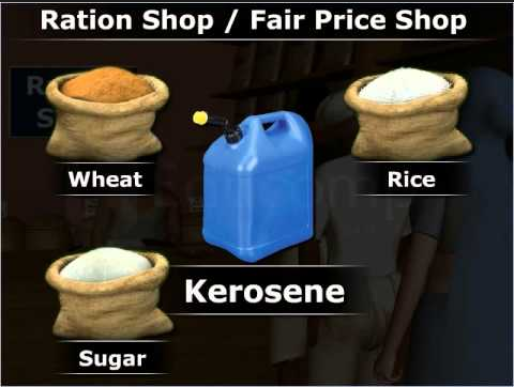
The PDS reflects the MSP and therefore the agricultural practices endorsed. Rice, Wheat, and sugar are the main commodities generally available for public distribution. The stark correlation is that PDS has reasonable stocks of rice, wheat, and sugar but pretty much nothing else in relative subsidy, if one can go by TN PDS. What percentage of the rice and wheat procured from farmers had actually ended up in the bellies of its intended beneficiaries is anyone’s guess. PDS rice in TN offered for free is a well hunted commodity by small hotels and idly batter sellers, apart from trafficking.
Instead of dumping rice on people for free, it helps if the government offers the same incentive on any grains to the liking of the public. The incentive from free or low-cost rice when transferred to other grains can be very attractive for the public who don’t want PDS grains. This will put more demand on the PDS for various other grains which can in turn cause the government to procure them by enticing farmers with appropriate MSPs. By this way the demand for rice and wheat can only fall in the PDS, and therefore procurement. To start with, government could consider offering the equivalent cash subsidy to people who voluntary forgo their PDS rice or wheat. Governments can also consider offering anything else to people who don’t want PDS rice or wheat. It is always worth it to reduce procurement of these grains.
Several states in the country have huge debts. The role of each state’s agricultural sector in its mounting debt is something we need to contemplate. Free power that drove power sector bankrupt, flagship commodities procured with significant MSP plus bonus, and finally delivering it for free or cheap, has a huge tag on the government. At the end of the day, the point is not whether it is offered for free or for 3 rupees a kilo or 8 rupees a kilo; the point is how much of the procured grains didn’t find a place on the plates of its beneficiaries.


