
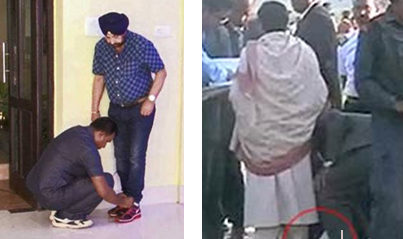
The recent arrest of an IPS officer on charges of cheating in a UPSC civil services examination, throws up serious questions on the kind of police officers we recruit. The arrested officer was a probationary IPS officer serving as an assistant superintendent of police in Nanguneri, Tirunelveli in Tamil Nadu. He is also the proprietor of a civil services training institute in Kochi and Trivandrum, according to the Times of India. In 2015, he had ranked 112 in his second attempt. His arrest brings up larger questions of the role these IAS and IPS officers play in the society. While his recruitment to the police cadre is now questionable, the larger picture is the effectiveness of the selection system.
The recruitment procedure to our civil services is close to a century old when candidates first wrote tests only in London. The selection today of candidates for the IAS and the IPS mainly involves a couple of written tests that include objective or multi-choice questions as preliminary exam. There is then a main exam involving the main study subject. This is followed up by an interview, with the process stretching to over a year. One fails to understand the extreme emphasis on academics for the civil services. The emphasis on academics was designed for the age when the idea of dishonesty and performance was not relevant. Academic excellence was an obvious choice in the absence of any other benchmark or indicator.
In this information age where access to any information is easy, how do these contribute to a good selection criteria? The question now is the kind of people we ultimately recruit for some of the face defining reforms and the running of the nation. There is enough proof that the UPSC selection procedures do not guarantee performance or character. There have been several instances of poor performances and dishonesty pointed out in recent times. From 2014-15 to August 2017, about 48 IAS, IPS, and IRS officers faced corruption charges while 13 others were dismissed in the same period. The Bihar Staff Selection Commission (BSSC) chairman, an IAS officer, had been arrested earlier this year. Another notable case is the IAS couple of Madhya Pradesh who had assets of 350 crores.
What is the point of such elaborate selection procedures with lakhs of prospective entrants wasting time and energy, appearing and reappearing through the years, when the nation also hasn’t got its right due either. It is important now for the nation to determine how these recruits have been an asset in the running of this nation. It needs to be emphasized here that a probable reason for dishonest people ending up in these privileged services may be the lack or quality of background verification. In many other countries like the US which has the world’s biggest prison population, such incidents are uncommon though police excesses may be evident. The selection procedures in these countries involve not just crime or credit history, but also information on the candidate’s general attitude like being lazy or telling lies or even being stupid, which are gathered from past colleagues, neighbors, classmates, and other associates. The decision to hire takes into account all such personal information.
The police officers in particular have an increasing stake in this country and therefore their quality is important. The role of a police officer is one of the most challenging and difficult jobs in the nation. The police officers of today face a tough challenge of maintaining law and order in the society like never before. The officers of today combat crimes, law and order situations and risks that was not relevant ever before. Life style changes, technological developments and international relevance for all happenings, have made the job tougher. The emerging lifestyles brings with it opportunities and challenges in every field including the field of effective policing. Their efforts are also increasingly sought in non-traditional crimes like cyber crimes and economic crimes. The police of today are confronted with the need to uphold the ethics binding on them. The code of conduct for the United Nations Law Enforcement Officials emphasizes a high degree of responsibility to be associated at all times, while carrying out their duties.
Police officers are primarily required to be in self-compliance with the law. The officers should be aware of law enforcement upon himself, when he is on duty, enforcing it. The presence of these law enforcement officers in the force and the force itself has been established in line with the societal aspirations. Whether the officer is engaged at the local, state or national level, he plays a role in enforcing the community or public will, a will of safety, security and equality of all. Police officers need to take decisions based on ethical considerations too, while at the same time ensuring that he or she is not in conflict with the law. The officer should defend this system and be careful not to encroach upon it.
With so much in stake for the nation through the police force, the trend in the changing character and barging capabilities of dishonest people into the elite service is alarming. The situation calls for a selection of people who are not only honest but also capable. To achieve this UPSC itself should reform to a new vision that this country demands of them. It should constantly update its recruitment procedures based on the effectiveness of its earlier recruits. We just can’t keep investigating and prosecuting the corrupt police officers on one hand, while at the same time keep recruiting such prospects. We need to produce officers who have the ability to stand and perform for the people rather than being willing to wipe another’s shoe or wanting to have their own shoe laces tied by another.
|
|


