
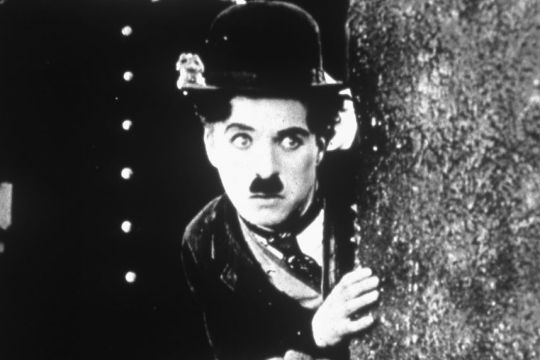
The art of filmmaking has experienced tremendous growth and innovation in the 120 years since the first minute-long silent clips that involved little technique, no camera movement, and a big, wooden contraption that resembled a camera obscura. The silent movie era spread across thirty years from the 1890s to the 1920s, during which time it emerged from being an obscure novelty to a main form of entertainment. The origins of film making may be attributed to the remarkable developments with regard to the ‘Moving Pictures’ that involved the patenting of Kinetograph and Kinetoscope in 1891 by Thomas Edison and William Dickson; and the Cinematograph by the Lumiere brothers in 1895. By the end of the century, films with a run time of less than a minute were being exhibited in the US and abroad. Very soon there were audiences going to movie houses called ‘Nickelodeons’, where short films of about 10 minutes of run time were shown on makeshift screens for only a nickel. With its steep increase in its popularity, live piano music was played with the film.
In the silent film era, the fist public show is of paramount important. The Lumiere brothers Auguste and Louis are credited with the first ever public film screening. The two are pioneer contributors to the birth of films in 1895. About 10 short films with a total viewing time of 20 minutes were shown in the basement lounge of a café, close to Paris on December 28, 1895. They demonstrated their device which functioned as a camera, projector and a printer which they called as a Cinematograph. The Lumieres were originally involved in the production of photographic equipments. The Cinematograph patented on February 13, 1895 was smaller than Eddison’s Kinetograph, light weighted and hand cranked. The films were run at a speed of 16 frames per second. The brothers kept their invention a closely guarded secret with Auguste organizing the private screenings. The brothers were soon on their way to opening theaters to show their films.
Most of these silent films of that time were documentary with the actors and actresses using pantomime to express their emotions. Whenever dialogs were necessary, it was printed out for audience to read and understand. In lieu of sound and spoken dialogue, title cards, also called intertitles, were first seen in 1903 and consisted of frames of text, either drawn or printed, that were inserted intermittently between sequences of the film for one of a variety of purposes. Generally, there were two types of title cards: dialogue intertitles, which were used to convey dialogue, and expository intertitles, which provided supplemental narrative material where the picture couldn’t convey the full situation by itself. After World War I, movies were soon becoming America’s popular form of entertainment. Every town had at least a theater by the mid 1920s. Theaters normally changed their shows about twice or thrice a week. The silent films had its own uniqueness with the viewers normally talking to each other when the film was shown. Statistics reveal that almost everyone was going to watch movies in the 1920s. In 1928 it was estimated that there were 28,000 theaters in the US with tickets priced from 10 cents to 50 cents. The majority of the US film production at the beginning of the decade was in or close to Hollywood, though some were made elsewhere too.
The silent films were the biggest products of the film industry for the major part of the 1920s, though film evolved being longer, costlier and better presented. Film production became to be more organized with writing, costuming, makeup and directing being split up and worked upon separately. An important point to be emphasized here is that even the early silent films were organized into genres like historical, melodrama etc. The major studios of the time were Warner Brothers, Radio-Keith Orpheum, Loew’s Inc, Fox Films, and Famous Players, which were also together referred as ‘The Big Five” American Movie Classics Company, 2012. These studios had elaborate film production sets and theaters. Among the other minor film studios were, ‘The Little Three’ made of the Universal Pictures, United Artists, and Columbia Pictures.
The evolution and revolution associated with the development of the film recording and projecting system was a very vital aspect of the film industry then. These developments on the picture recording and projection were not in any way associated with sound. The film projectors that were developed later were all based on slide projectors, which once provided entertainment to the masses. The Magic Lantern also known as Laterna Magica is a 17th century image projector. It is the original version of the modern slide projector with a complex history involving many people in its development. It is difficult to attribute any inventor to the Magic Lantern. Here a concave mirror is arranged before a light source which projects the light through a slide, together with an image. A lens projects an enlarged picture of the original image onto a screen. The Magic Lantern evolved over a period of two centuries from basic projectors like Sturm Lantern. Magic Lantern was in fact a popular term for Slide Projectors during the 19th and 20th centuries In 1798, Robertson, a Belgian created a complex Magic Lantern horror show using spooky sounds and smoke that even caused his customers to faint. The sounds were produced externally which still had its impact.
The era of the silent films had many contributors contributing to film industry in terms of technology. The primary technology for the industry then was hinged on the camera and projector. The development of the silent era films went hand in hand with the development of these camera and projection systems. It was a period of research and development which began with basic models with fundamental capabilities.
The charm of the silent movies is proved even today with the film Wall E. Well E is a science fiction film made recently in 2008. The film projects the humans to have abandoned the earth due to rubbish and thrash. The computer animated film was produced by Prixar Animation Studios. It was a partially silent film. The first forty minutes of the film has barely has any dialogs and almost no human beings on screen. The film portrays the cartoonic extinction of man. The film won praise world over and ranked first in the Times ‘Best movie of the decade’ and is regarded as one of the best silent movies with the soul and spirit of silent movies at its best.
The silent film era had marked itself even in contemporary times with its classics. There was clarity to a high extent in most films. These have however been subjected to wear and tear through the years resulting in poor quality today. The silent era made its own heroes and classic films. One of the popular actors of the silent film era was Charlie Chaplin, who went on to become a world renowned comedian. Born on April 16th, 1889 as Charles Spencer Chaplin in London, the comedian’s rise was indeed a rags to riches story. His mother Lily Harley was a music hall singer which gave Charlie a chance to showcase his singing. Despite being at odd jobs too, he was always aspired to becoming an actor and was in touch with a theatrical agency. He finally made his acting debut as a pageboy and in 1908, teamed up with Fred Karno to become one of its stars in ‘A Night in an English Music Hall’. In the US, he got the attention of a producer Mack Sennett who signed him for $150 a week. In 1940 he made his film debut with his ‘Make a living’ which was a one reel, followed by ‘The Kid Auto Race at Venice’. He was soon on his way to being a superstar even at the age of 26. Many consider him to have seen his career peak towards the end of the silent era. Among his popular films are ‘The Gold Rush’, ‘The Kid’, ‘The Modern Times’ and ‘The Great Dictator’. Charlie Chaplin is today synonymous with silent films.
The silent era has gone and we are only left with its relics to cherish. As we watch the movies of today with all its hi-tech and glamour, we shouldn’t forget the days when people tried to raise them up from obscurities. We shall always remember the contributions made by these innumerable men, from which our modern cinema has emerged.


