
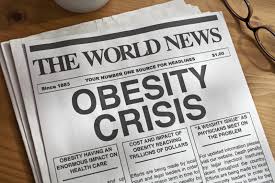
With quality healthcare costs escalating to newer levels, more and more people are falling beyond the scope of care and treatment. The health scenario of the global population brings about huge challenges which at some point of time, the governments may become incapable of handling.
One of these serious problems brewing right now is obesity and the irony of this is that obesity is more associated with poverty now than with wealth.

It has just been emphasized that obese people do not seem to respond to hunger-related hormone glucagon, the way lean people do, according to a study in Journal of Clinical Endocrinology & Metabolism. This observation comes at a time when developed nations are already pondering on the association of poverty and obesity, which is increasingly evident in western societies. For the first time in history, poor people are now the most obese ones.
Obesity in poverty-stricken populations may be attributed to fast foods, snacks, beverages, refined grains, and non-home foods. Energy intensive foods and sweetened beverages are more consumed by these poverty-owners as healthier foods are costly.
The fact that fast food outlets and convenience stores establish themselves primarily in low-income neighborhoods is evident of this. Low cost diet is a clear indicator of weight gain or obesity as was revealed in several surveys in western countries.

In the UK about 25% men and 30% women who find themselves amongst the biggest poverty-owners are obese. This is even reflected among children where 12.3% of poor kids are obese in England compared to 6.8% from wealthy backgrounds. In the US while one-third of the country is obese, another one-third is overweight.
A recent review of 3139 counties revealed that counties with over 35% poverty rate had an obesity rate of about 145% in comparison to wealthy counties. The Robert Wood Johnson Foundation has already reported that 33% of Americans earning less than $15,000 annually are obese.

A sedentary lifestyle and poor nutrient food that is devoid of vegetables and fruits also make this population vulnerable to diabetes and other metabolic diseases.
Obesity has also been found to be a major risk factor for several nutrition associated non-communicable chronic diseases like type II diabetes mellitus, ischemic heart disease, and hypertension.
Poor neighborhoods are associated with crime and violence which force people stay indoors. They are also very unlikely to afford gym membership or buy related accessories like shoes and clothes. People who are less active, particularly those with about two hours lesser activity each day, are more prone to becoming obese.

This correlation of obesity and poverty is particularly worrying in children and adolescents. Childhood obesity unfortunately has considerable impact on life expectancy and the national economy.
Children who are unhealthy are an indication of an unhealthy future nation. Health statistics from Canada show that adolescents with type 2 diabetes have a higher chance of kidney failure, limb amputation and even premature death.

Obesity is increasing at record levels for the first time in human history, reflecting ironically the fact that people are eating far below of what is expected. Nations all have a responsibility to deal with this as a current pandemic.
When even fruits and vegetables have already gone beyond the scope of millions, sophisticated treatments shall always remain an unachievable aspiration for them.
Solving this requires a bottoms-up approach for medical research, finding cheaper drugs and methods for en masse consumption, rather than high end sophisticated treatments for a handful.

The question of whether reversal of poverty could reverse obesity remains a topic of speculation. It is however high time for economists and health professionals to work together to ensure healthier populations, which is necessary for almost all developed and developing societies.
However there shall be no progress towards this goal, when health and allied sectors including pharmaceuticals remain more as commercial entities than humane institutions. All medical research directed at expanding the frontiers of medicine are unwarranted and needless, when they are focused at micro-level than at the macro-level.


