

The rise in petrol prices in India, in the backdrop of the fall in rupee against dollar has been sending many into political opportunistic exploitation. Both the decline in rupee value and therefore the rise in petrol prices are factors not under the direct control of the government or attributable to domestic factors, to any noticeable degree. These imply how a globalized world can impact the remote corners of a country. The fact that such rises cause inconvenience is undeniable; however it needs to be highlighted here that it is equally important for us to endure this, in the short run than beat around it. Also it needs to be emphasized here that petrol had risen more significantly earlier too, rising over 50 percent between 2010 and 2012. However, the story at hand is what is in store for people, given the fact that such occasional economic hardships for any nation and therefore its people, can never be ruled out.
It is very important for our countrymen to understand the fundamentals of how our life is impacted by global events and the role and scope of action for government. Today we witness many nations facing uncertainty, some even without a clear road to prosperity ever again. These nations are primarily perceived as ones whose governments should have handled its responsibility with better care and caution. Unhindered borrowing, extreme subsidizing, and higher spending by governments can put countries in a tight spot, sooner these days. And if there are corrupt or unconcerned elements within the governments, tougher days could be much closer for that country. In today’s globalized economic scenario; people must be willing to bear economic hardships in the short run for being safe in the longer run.
‘Cash crunch’ is a word being more used today with regard to nations. Nations in serious problems today include those that are expected to run out of cash soon. Greece unfortunately is one of the case studies when it comes to economic woes that showcase how an ever demanding population and ever obliging leaders can bring a nation to halt. It was only last month August 2018, that the country emerged from eight years of bailouts, austerity and unprecedented economic controls. In 2015, The Guardian.com in its article, A decade of overspending: how Greece plunged into economic crisis; opined that in the 10 years before the financial crash, public sector wages doubled and departmental spending soared in the country. A report by the EU in 2014 estimated that Greece lost a third of its VAT revenues in fraud and avoidance. Greece had a six-band VAT system.
Greece never recovered from its 2008 crash. At the end of 2015, the GDP shrunk by 26% compared to its 2008 levels. Borrowings and austerity measures had to be implemented and unemployment went up by 28 percent to reach 49.8 percent. With 44% of Greek households seeing a fall in pension and wages, people began cutting their subscriptions to TVs, internet etc. People were reducing their consumption of non-necessities and postponing payments. Today, there is a low opinion of the work of the national government and a low level of trust in the country’s political institutions.
Bearing occasional tax or price hikes could be important for the well being of the people in the long run, rather than pressing for subsidies or lowering of taxes. While all nations are susceptible to financial crashes or depressions, the economic health of a nation is paramount in reducing the susceptibility to such events and its resilience to recover. The difference in quality of life between the people of Germany and that of Greece is so much today that it would be hard to believe that the two have had similar lifestyles before.
In one of the poems titled, ‘God give us strength’ available in www.writerak.in on fighting corruption, a stanza occurs as:
God give us strength
Strength to realize that the welfare of any household;
Can never be infinitely independent from welfare of the nation.
(The poem can be accessed here: http://writerak.in/2006-2/)
These lines suggest that ultimately at some point of time the welfare of any household would be reflective of that of the nation. When nations were first formed decades or centuries earlier, they hardly had much impact on the people. Effects of governance gradually began to be felt as governments covered the populace with benefits like infrastructure, healthcare, etc. With greater integration and taxes, there was a gradual realization that governments can impact their lives in undesirable ways too. With greater exercise of power and policies, and its varied impacts, the importance of leadership that led the government came into focus.
The implementation of economically infeasible policies for political gains has been widely evident. Tax reliefs and subsidies have leveraged political parties at all levels, contributing to uncertainty for the people in the longer term. With no solid precedents of consequences, people kept demanding and governments obliged through significant subsidies or tax reliefs.
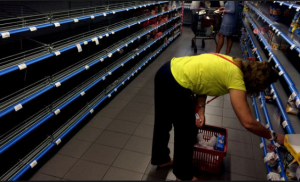 Stories of people’s painful experiences like that of Greece and many more to follow will lead to an understanding that at the end of the day everything boils down to individual hardships. The era of unreasonable expectations and uncooperative public demands could be nearing its end. The belief that the economic turmoil of the nation and all its challenges are confined to the corridors of governance is breaking. With rising economic hardships, the idea of the agony of a nation being the agony of the household is more evident today than ever before. If governments are, of the people, by the people, and for the people; so are its debts too. Responsible leadership has now given way to responsible and collaborative citizenship, where citizens are more understanding of the consequences of their demands and its strain on the country.
With the unprecedented and inevitable responsible citizenship over the horizon, there is no doubt that we have turned a new leaf in our history of public governance. Given the fact that even developed nations have serious economic problems glaring at them, a hope that responsible citizenship should be enough to maintain the feasibility of nation running is a prayer in everyone’s lips.


Hello ,
I saw your tweets and thought I will check your website. Have to say it looks really nice!
I’m also interested in this topic + have recently started my journey as young entrepreneur.
I’m also looking for the ways on how to promote my website. I have tried AdSense and Facebok Ads, however it is getting very expensive. Was thinking about starting using analytics. Do you recommend it?
Can you recommend something what works best for you?
Would appreciate, if you can have a quick look at my website and give me an advice what I should improve: http://janzac.com/
(Recently I have added a new page about Rockwall Investments and the way how normal people can make money with this company.)
I wanted to subscribe to your newsletter, but I couldn’t find it. Do you have it?
Hope to hear from you soon.
P.S.
Maybe I will add link to your website on my website and you will add link to my website on your website? It will improve SEO of our websites, right? What do you think?
Regards
Jan Zac