
Most people are confused between a serial murderer and a mass murderer. A serial murderer is one who kills sequentially over a period of time while a mass murderer is one who kills many at one time. Mass murders are easily identified on the spot and are generally overpowered, negotiated to surrender or killed in action.
Like the shootings and hostage taking that frequently occur, even in schools and colleges, the mass killers behind these are instantly recognized. A serial killer on the other hand is one who commits two or more murders in different events. However it is the serial killer who remains a mystery until caught, that has grasped public interest on the person and the methods adopted.
Many criminologists and experts in criminal justice management have their own profiling for the serial killer. For instance the well known clinician and criminal matter expert Jack Apsche profiles a serial killer as predominantly being a white male, aged between 20 and 30, who normally targets strangers near their homes or place of work.
Eric Hickey, a criminologist who had established an extensive demography database of serial killers had established the average age at which these killers get their first victim, at 28.5 years. About 71% of these serial killers operate at a specific location, rather than travel around.
 Many believe that serial killers targeting strangers simply imply that they kill without any motivation or there is a lack of motives. However it should be understood here that the fact is, the motives are only shrouded and is not seen. Serial killers rarely kill for money, they mostly do it for their sexual gratification or a mere sense of domination.
These killers normally have a varied dysfunctional background, particularly in their childhood days; associated with drugs, sexual or physical abuse. The reason for an individual to take to killings, which relieves him from a stress, is the ‘pre-crime stressor’.
Isolation and rejection in early childhood is a significant driver. These individuals get bonded with their day dreams and fantasies which develop with them into adulthood, translating their desires into action. For instance the ‘Son of Sam’ David Berkowitz was brought up in an adopted home and later told by his real mother, that he was not wanted. A majority of his later killings were women who had a similar appearance to his mother.
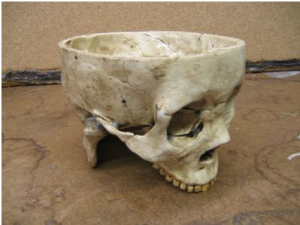
Murder is often pre-planned and also the disposal of the victim’s bodies. Sometimes these killer’s keep items or even body parts of their victims as trophies or memorabilia. Trophies remind killers of their success and how powerful they are. When killer Eddie Gein’s farm house was raided by detectives, they were shocked to see the items he kept. The top of a human skull formed a bowl, lampshades made from human skin were among his many trophies. He was however ruled as being insane and admitted to a mental hospital. Serial killers also often visit victim’s grave with a sense of pride and achievement, like Gary Ridgway called ‘the Green river killer’ who killed over 45 prostitutes till the advent of DNA, which tied him down as the killer.
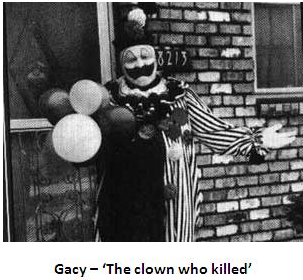
The FBI has an interesting additional classification as organized serial killers and disorganized serial killers. The organized one is intelligent, socially acceptable, who hide victim’s body, leaving little or no evidence. For instance Wayne Gacy who dressed like a clown, associated with groups and frequently hosted parties for friends and neighbors. He was a shrewd businessman who successfully hid his dark side for a long time. A teenage pharmacy boy had gone missing and he was last seen with Gacy, which got the attention. The dark side of Gacy, ‘the clown who killed’ was revealed. He had killed thirty three people. These organized killers track the media response to their crime while anticipating questioning by the police.
 The disorganized ones on the other hand are socially withdrawn, generally kill without planning, leave ample evidence and don’t follow their crime on media; for instance Richard Chase who horribly killed six people. His murders had several excessive and abnormal characteristics. The murder scene with all its gruesome features was full of hand and shoe prints which soon brought the police to his door.
With technology and more effective profiling, serial killing is considerably tracked better compared to any time earlier. Gone are the 19th century days when criminals like ‘Jack the Ripper’, went untraced. Serial killers always have an urge to commit their crimes, until they are rendered incapable either with their arrest or death. It is also possible that the different unsolved deaths, that apparently look different, might have a common killer. Given the complex profile associated with the organized serial killer, among those discussing such killings, could be the killer himself.


