
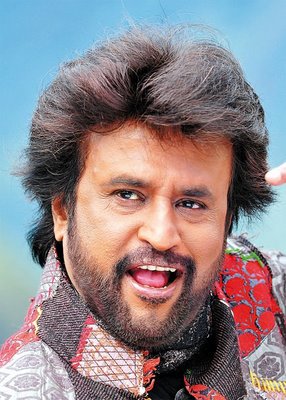
There has been a topic of ‘spiritual politics’ in recent times ever since super star Rajinikanth had announced his entry into politics. People had begun to ponder at the idea of spiritualism in political science. Can spirituality fit into politics? To understand the application of spirituality in politics, we need to first understand spirituality in the first place.
The Oxford dictionary defines spirituality in many ways.
- Relating to or affecting the human spirit or soul as opposed to material or physical things.
- Having a relationship based on a profound level of mental or emotional communion. (of a person) not concerned with material values or pursuits.
- Relating to religion or religious belief.
The association of science and religion is important and has been considered for ages. Science being objective based on facts, is open to verification, reproducibility, and change. Religion on the other hand is subjective which you shouldn’t question, but follow. However science stops at some point beyond which it cannot proceed and it is here that tenets of religious beliefs or spirituality steps in.
A parallel rendering is seen from the ideas of Philosopher David Hume’s skepticism on matter of fact. Hume opines that our reasoning concerning matters of fact are based on cause and effect. That is, we associate certain outcomes with certain causes and vice versa. He suggests that all our inferences about cause and effect come from our experiences. Another conclusion he makes is that all our belief on matters of fact lies in some object within our memory or senses, as well as a connection of custom associating it with some other object. For instance, he says that the belief that the Sun will rise up tomorrow because it has done this without a miss for billions of years, is still invalid and without reason. However he adds that skepticism can never undermine our reasoning based on common life. Abstract reasoning does not have a chance when it comes to nature and nature would always win.
As science gets more complex, dealing with it requires broader concepts of understanding and reasoning, based on values. We now enter a new domain between known and unknown, and interpret it based on our value systems and beliefs. The domain of quantum physics throws open doors to such understanding to perceive the real universe before us. The new physics makes a fundamental conclusion acknowledging that it is the observer who creates the reality. We are personally involved with the creation of our own reality.
Richard Feynman, a 1965 Nobel laureate for his work on quantum electrodynamics (Entangled Minds: Extrasensory Experiences In A Quantum Reality), says “We choose to examine a phenomenon which is impossible, absolutely impossible, to explain in any classical way, and which has in it the heart of quantum mechanics. In reality, it contains the only mystery.” This means that we begin to perceive our physical material world in response to our consciousness, like observing, thinking, reasoning, and also our intentions. Max Plack, the physicist to whom the quantum theory is attributed, saw consciousness as “fundamental,” and matter as “derivative from consciousness.” This consciousness is the spirituality as approached upon by an individual.
According to Sri Sri Ravi Shankar science and spirituality are often considered unrelated to one another. Science begins with a basic question what is this world? Spirituality begins with the question who am I? What is my purpose in life? Since ancient times, both forms of this knowledge went hand in hand without any conflict. However, science and spirituality have a deep, yet subtle association.
Spirituality is a description of a position that you as a human being should take in relationship to the way things are. Spirituality is anything that makes you feel joyous and content about the kind of life you are living at the moment. It helps you find peace and lets you deal with life’s innumerable situations with a clear head and a strong mind that doesn’t give up that easily. It does focus on the concept of meditation. At the end of the day, spirituality gives you deep insight about what life is and what the exact purpose of your life is. In its fundamental essence, spirituality seeks to awaken hidden insight about life and not to mention, death.
Since ancient times, man has lived in fear of spirits and devils and sought refuge in good spirits to thwart the evil ones. He had always sought symbols of power to adorn and revere. The vastness and magnificence of the universe was there to fall upon for men. When he pondered and explored the universe, man set himself in a never ending journey, sometimes seen as seeking the ultimate truth. In Dharmic religions, it is a duty of the individual to seek meaning and purpose to life. This is also interpreted as the pinnacle of wisdom. Understanding the universe, its attributes including its origin and inculcating a desire for oneness with it, is the pinnacle of knowledge.
Man perceives the enormity of the universe. How can something exist without a beginning and end. How can something have an endless limit?. Universe must have begun from some point of time, so what was there before that? He then realizes that the universe is itself an embodiment of time. His reverence intensifies his desire to associate with the universe and the knowledge that he will one day become a part of this magnificence. This relationship of man and universe, threw on him a reflection of himself, realizing what he perceives as the ‘secrets of life’.
Spirituality is a value system that is always open and adapted to individual interpretations. Nonetheless, the fundamental tenets of spirituality, though endlessly diverse; will never be in conflict. So how do you associate the elements of spirituality into contemporary political science? This could mean scaling down a static mega value system to a dynamic real-time, micro level governance. Again we can reason this out at the most fundamental and at the holistic levels, just as we did for science.
At the holistic level, the king or leader will not be seen apart from the rest of the subjects. He shall be merged with the subjects; emphasizing absolute equality. Universe is sans borders. The king will desire to promote beyond borders, what he promotes within his borders, as long as it benefits them and is desired by them. He shall act on the distress and needs of his neighbor states with equal concern. He shall have no ego in seeking what is desired from across borders too. This is very important in sharing natural resources like water. Spirituality emphasis on the equality of all living things, which means a due emphasis on the needs of flora and fauna too, which in turn facilitates environment. When such extreme emphasis is laid on universal equality, divisions like religion, caste, language etc. become invisible.
When you take to spirituality, there is less or no emphasis on material value which can be interpreted as not likely to be tempted by the lure of money. Leadership theory says the culture of any organization is the culture of its founders or leaders. This is valid for political parties too. So an honest leader can ensure compliance by fellowmen.
A spiritual leader will promote and encourage spirituality. This has huge implications for the state. Emphasis and benefits of values and meditation are huge for any people. The rule of self will be more prominent than the rule of law. There could be a decline in crime rate and criminals. The energy and interests of the youth can be channeled in the right direction. When children begin to learn philosophical and meta physical concepts, they will find it very easy in academics and excel in grasping maths and science.
Spirituality emphasizes on simplicity and charity. Thus wasteful expenditures or expensive things are abandoned and a need to share or donate to the less fortunate is encouraged. This has its own benefits to the society. Inclusion of spiritualism in politics really has endless benefits and insights.


